

New Roads, Same Spell
On Growing Up Around Black Magic in America

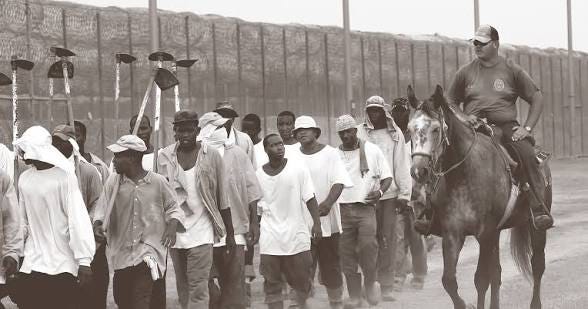
I was raised in a small haunted town called New Roads in Louisiana — where the roads weren’t new, but the names were.
Where Black boys had names that echoed down from ancestors who spoke with stars in their throats, but were called "thugs" by principals who didn’t know the power of a resurrection. Where every street corner sermon sounded like prophecy and pain, where every barbershop held more truth than the Sunday pulpit. I saw the miracle and the mourning braided into the same breath.
🎧 “The Blacker The Berry” • Kendrick Lamar
The thing is, I didn’t grow up Black. But I grew up watching God walk around in Black skin.
And I mean that without metaphor. Without needing to soften it for the academy or put it through the polite bleach cycle of performative allyship.
I mean: I saw what Kendrick meant. I heard the beat drop and thought of Jason’s laugh. Of Quay’s eyes when he caught you in a lie. Of Miss Toni’s fried chicken that could break curses. Of the way the whole block bent time when someone started footworking at a backyard party. I mean real magic — the kind you can’t colonize, patent, or put on Spotify.
But America did try. America does try. Daily.
“You hate my people, your plan is to terminate my culture…”
The plantation didn’t die. It just got digitized. It got gentrified. It got a grant. New Roads was a holding cell. The streets curved like question marks. Who gets out? Who gets remembered? Who gets erased?
I learned early that Black kids had to memorize fear like a second language. I watched my friends get told they were too loud, too angry, too much — as if white discomfort was holy scripture. Meanwhile, I saw these same friends perform impossible acts of grace. Helping raise siblings. Writing rhymes like confessions. Smiling with gold teeth like the sun had finally come home.
White girls got called “passionate” for less. Black boys got called “problems” for breathing too hard.
And what did I do?
I wrote poems in my closet and wished I could trade skin. Not out of guilt — out of awe.
I was raised, in part, by a Black woman who was paid to love me. Her name was Mary Louise. When I was five she bought me a little piano sound box that played Für Elise — spent her own money on a gift for a white child she was hired to care for. I used to cross the railroad tracks to sit in her house like it was the safest place in the world. And it was. She braided my hair and fixed my plate and called me baby like a spell. She poured more tenderness into me than I had any right to receive. I didn’t understand until much later what that cost her. What it costs any Black woman in the South to love white children while the world does what it does to her own.
My father farms cotton.
Let that land.
I grew up on former plantation ground. New Roads was once a whole plantation. The streets we played on, the yards we ran through, the corner store, the barbershop — all of it sits on land that was worked by enslaved people who never got to leave. We just built a town on top of it and called it home and stopped asking questions.
Most white Louisianans never do. We drive past the fields. We eat the food. We cross back over the railroad tracks and go home. We let the beauty of this place absolve us of its history. We call it culture when it’s convenient and we call it the past when it’s not.
I come from the line that owned the land that built the thing I’m writing about. That’s not abstraction. That’s my bloodline. And most white Louisianans never sit with that. Never place themselves inside it. Never ask what it means that the magic they consume was grown in the same soil their ancestors stole.
I’m asking. I’m still asking.
“I'm the biggest hypocrite of 2015…”
I was. I am. Because I can write this now — after years of hiding in my whiteness like a panic room. After benefiting. After witnessing the magic and still not protecting it.
Let me be honest.
I fetishized it. I wanted to be it. I put it in poems like zoo glass — stared at it, took notes, admired its ferocity. But I didn’t know what it cost. I didn’t get the price of brilliance when your body is the receipt.
And this is not an apology. This is a mirror. Because whiteness trains you to center yourself even when you’re confessing. So let me instead say:
I saw God — in the basketball courts where my friends taught me how to pivot, not just in game, but in life.
I saw God — in the way Black moms said “baby” like a spell that could hold the whole world.
I saw God — in the way Kendrick said “You sabotage my community, makin’ a killin’ / You made me a killer” — and I felt the trap. I understood the hex.
I saw it, and I didn’t know what to do with it. So I wrote. And I’m still writing. Because the pen is the only place I can honor what I can never replicate.
“You vandalize my perception but can’t take style…”
They tried to kill the style — but it multiplied. Out of no money came new language. Out of trauma came choreography. Out of exile came whole-ass galaxies.
White kids like me copied the rhythm and forgot the ritual. We took the cool but not the cost. We wore the slang like it was cosplay. We memorized the lyrics but skipped the pain in the liner notes.
But I remember.
I remember New Roads like a burning bush. I remember the smell of sweat and speaker static. I remember how every Black kid I knew was already an oracle, already a genius, already a survivor — and I remember how the world refused to see it.
“So why did I weep when Trayvon Martin was in the street…”
Because I saw Trayvon’s face in boys I knew. Because I remembered how the cop in town used to park outside the corner store like he was on safari. Because Kendrick’s line hit me like scripture. Because every Black life lost feels like another magic trick gone too soon.
New Roads taught me this: If you want to see America’s soul, don’t look at the stock market. Look at how it treats Black children.
If you want to find divinity, don’t go to church. Go to a cookout. Go to the barbershop. Go to a Black mama’s living room where the fan hums like a hymn.
If you want to heal, don’t start with talking. Start with listening.
Start with watching how Black joy still manages to dance through all this. Start with Kendrick. Start with the berry. Start with the bruise. Start with the beat.
The Map
New Roads is still there.
The streets still curve like question marks. The barbershop still holds more truth than the pulpit. Miss Toni’s kitchen still smells like something holy.
And they are redrawing the map.
Not with guns this time — with lines. Quiet lines on official paper, signed by men in air conditioning who have never stood on a Louisiana summer corner and felt the whole block bend time. Men who never heard an oracle rap over a phone speaker in a parking lot. Men who are trying, again, to make those streets not count.
This is what erasure looks like in 2026. Not a burning cross. A redistricting plan. A press release. A legal brief.
Angola sits alongside the Mississippi River not far from where I grew up.
The largest maximum security prison in America. Built on a former plantation. Majority Black. Sitting right there across the Mississippi from the streets that curved like question marks where I grew up. Nobody talks about it like the obscenity it is. It’s just there. Like the heat. Like the humidity. Like the weight of everything Louisiana refuses to name.
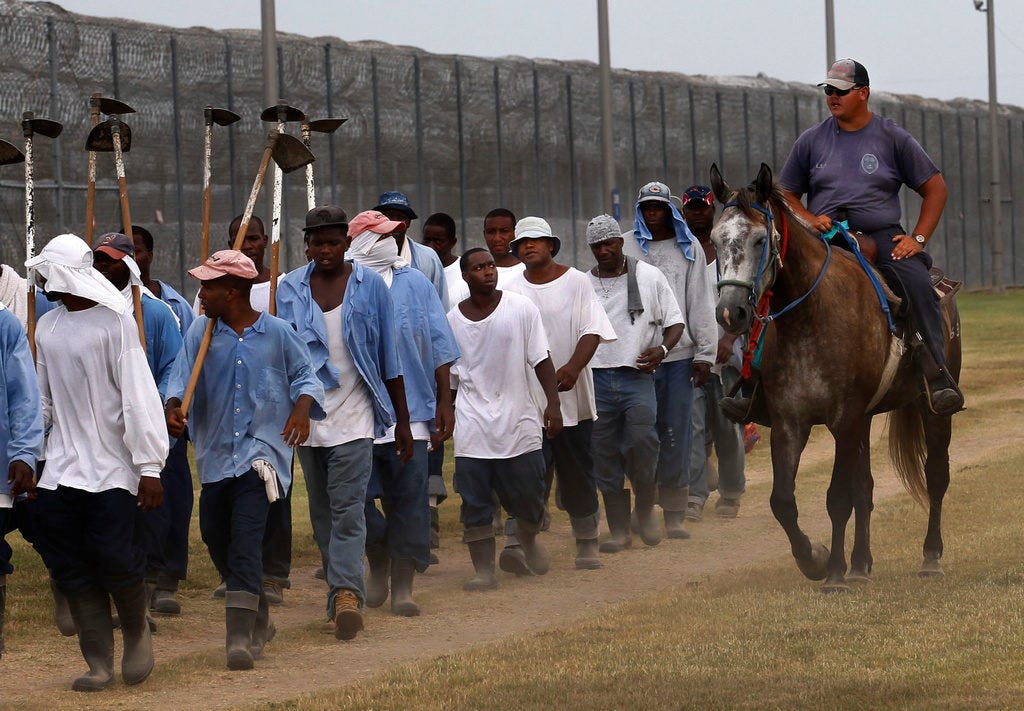
The plantation didn’t die. It got a new address.
But here is what New Roads taught me, what Kendrick encoded, what Miss Toni knew when she seasoned the cast iron:
You cannot redraw what has already been written in the blood and the beat and the bone of a place.
The magic doesn’t live in the map. It never did.
They can move the lines. They cannot move what grew there.
What They’re Doing Now
On April 29, 2026, the Supreme Court ruled 6-3 that Louisiana’s congressional map — the one that gave Black voters two seats in a state that is one-third Black — was unconstitutional.
The next day, Governor Jeff Landry declared a state of emergency and suspended the upcoming primary elections.
Let that land.
A state of emergency. Not for a hurricane. Not for a flood. For the possibility that Black people might vote and it might count.
Republican lawmakers moved immediately to redraw the maps. To eliminate one or both of Louisiana’s majority-Black congressional districts. In a state where one in three people are Black.
The plantation didn’t die. It just got a gavel.
On May 9th, Gary Chambers stood before the Louisiana Senate committee and said what the barbershop already knew:
“You are your ancestors’ children and grandchildren. Thieves, robbers, liars, consistently.”
“You’ll go to church on Sunday, tell the Lord you love him. But you ain’t praying out of the same Bible I’m praying out of.”
“Now you may not care what history records you as. But history is watching.”
Miss Toni knew this. The footwork at the backyard party knew this. New Roads, with its streets curved like question marks, knew this long before the Supreme Court put on its robes.
They are redrawing the map. Again. Still.
And Gary Chambers is still standing in the room telling the truth out loud, the way Black people in Louisiana have always told the truth — not because they believed it would immediately change anything, but because silence is also a kind of erasure.
Let’s keep excavating the rot till the garden’s ready for rebirth.
And don’t forget who planted the seeds first.